中考
2025年重庆市中考英语
2025年重庆市中考英语,满分150分,考试时间120分钟,题型包括阅读理解、完形填空,逐题解析,提供Word下载。
- 年份
- 2025
- 省市
- 重庆
- 科目
- 英语
- 类型
- 试卷
- 状态
- 普通
- 更新时间
- 2026-07-22
试卷信息与训练价值
- 考试年份
- 2025
- 考试地区
- 重庆
- 考试类型
- 初中学业水平考试
- 科目
- 英语
- 满分
- 150 分
- 考试时间
- 120 分钟
- 题型
- 阅读理解、完形填空
- 答案状态
- 含参考答案
- 解析状态
- 逐题解析
- 文件格式
- Word
- 推荐完成时间
- 120 分钟
- 适合人群
- 九年级复习、中考真题训练
解析涉及的重点知识:听力、阅读理解、完形填空、书面表达、词汇。
在线试题
重庆市 2025 年初中学业水平暨高中招生考试英语试题
(全卷共九个大题 满分: 150 分 考试时间: 120 分钟)
注意事项:
试题的答案书写在答题卡上, 不得在试题卷上直接作答。
作答前认真阅读答题卡上的注意事项。
考试结束, 由监考人员将试题卷和答题卡一并收回。
第Ⅰ卷(共 100 分)
I. 听力测试。(共 35 分)
第一节(每小题 1 分, 共 6 分)
听一遍。根据你所听到的句子, 从 A、B、C三个选项中选出最恰当的答语, 并把答题卡上对应题目的答案标号涂黑。
1 A.Good morning. B. Good afternoon. C.Good luck.
2 A.Well done. B.I hope so.
3.
4 A.Here you are. B.Glad to hear that. C.It doesn’t matter.
5 A.Don’t mention it. B.Sounds great! C.Be careful!
6 A.Take it easy. B.Thank you. C.Have fun.
第二节(每小题
1.5 分, 共 9 分)
听一遍。根据你所听到的对话和问题, 从 A、B、C三个选项中选出正确答案, 并把答题卡上对应题目的答案标号涂黑。
7 A./‘dʒɜːni/. B./dʒei/. C./dʒʌdʒ/.
8 A.Blue. B.Red. C.Yellow.
9.
10 A.Lucy. B.Lily. C.Mary.
11 A.Thin. B.Short. C.Tall.
12..
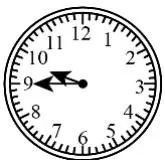
A
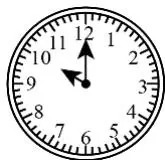
B
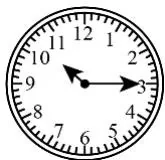
C
第三节(每小题
1.5 分, 共 6 分)
听两遍。根据你所听到的长对话, 从 A、B、C三个选项中选出正确答案, 并把答题卡上对应题目的答案标号涂黑。
听材料,回答问题。
13. What is Li Hua doing now?
14. How do they both feel?
听材料, 回答问题。
15. Where is Emma now?
16. Why is Mark laughing?
第四节(每小题
1.5分, 共 6分)
听两遍。根据你所听到的短文内容,从A、B、C 三个选项中选出正确答案,并把答题卡上对应题目的答案标号涂黑。
17. How often will the students have a volleyball match?
18. How far does everyone need to swim in the test?
19. What will the students have in June?
20. What does the speaker expect the students to be like?
第五节(每小题 2 分, 共 8 分)
听两遍。根据你所听到的演讲内容,在横线处补全笔记。每空1 词,并把答案填写在答题卡上对应的位置。Make People Want to Listen
21.People to listen.
22.Some bad habits: √… √speaking ill… √speaking
23.Some suggestions: √be an person √keep…words √wish…well √speak…proper…
24.The speaker thinks these suggestions can help us have better conversations, so we will have a with people around us.
II. 语法选择。(每小题 1分, 共 10分)
根据短文内容, 从 A、B、C三个选项中选出一个语法正确的答案, 并把答题卡上对应题目的答案标号涂黑。
Li Liang has always been interested in science since childhood. He’s good solving problems in daily life. It is dream to make people’s lives better.
One night when he was 11, he the news on TV with his parents. He heard that there were harmful chemicals (化学物质) left in the vegetables people ate in a village nearby. Parents and were worried about their food safety. He couldn’t sleep that night he kept thinking about the kids of his age who didn’t have safe vegetables. He decided something to help. He spent over a year in researching and testing. Finally, a tool by him. It could show results fast, so people would know the food was safe.
Now, as college student, he gives public talks and holds science workshops (工作 坊) to share his research methods. Through his work, more and more students are following in his footsteps.
25.
26.
27.
28.
29.
30.
31.
32.
33.
34.
III. 完形填空。(每小题
1.5分, 共 15分)
根据短文内容, 从 A、B、C、D四个选项中选出一个能填入相应空格的最佳答案, 并把答题卡上对应题目的答案标号涂黑。
The sunlight came through the windows, bringing in the hot summer air. I saw a long line of people at the medicine pickup counter (取药处). I took a deep breath to cool down.
I joined the line to for my turn. The weight of my coming baby made it for me to stand straight, and my legs felt heavy. I raised my head and saw there were still quite a few people ahead. Some were playing with their phones and some were talking quietly. The line moved so
I began to feel weaker in my . I couldn’t stand for long. “Should I ask the one at the front for help? What if he ? He’s been waiting for a long time, too. Will the other people agree?” I thought to myself, “But I …” My forehead was starting to sweat (冒汗).
I knew I couldn’t wait. I walked up to the person in the line and asked in a low voice, “Excuse me, could I go first? I am not feeling so well.”
The young man looked at me in surprise he saw my belly (肚子). He agreed. Almost no one noticed what happened. I thought he would remain behind me. Instead, he moved straight to the end.
The second person her phone. She looked at me and looked back at the young man. Then she moved to the back, too. Then the third one, then the fourth…until the young man came right me.
I felt a gentle wind blowing across my face, and the summer heat was gone with the wind.
35.
36.
37.
38.
39.
40.
41.
42.
43.
44.
IV. 阅读理解。(每小题 2分, 共 30分)
阅读下列材料, 从 A、B、C、D四个选项中选出最佳答案, 并把答题卡上对应题目的答案标号涂黑。
A
When someone’s heart suddenly stops, we can use an AED to save him or her. It can be found in public places and it is easy to use. Turn it on and follow the voice instructions. Here are some key steps.
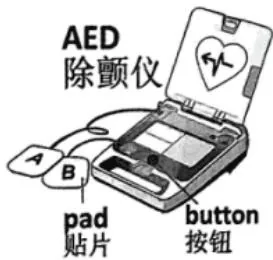
Place one pad onto the upper-right chest(胸膛). Place the other onto the lower-left chest.
Connect the pads to the AED.
Don’t touch the patient! Wait for the result of the examination.
Press the button when a shock is advised.
Give CPR(心肺复苏)if needed.
Remember: It’s best to treat the patient within the “Golden 4 Minutes”! Time matters! If an AED is not around, send someone to get one and give CPR while waiting. Don’t forget to call
45. When is an AED used?
46.Where should the pads be placed on the patient?
A
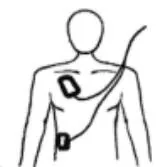
B
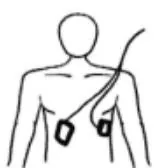
C
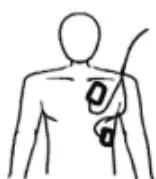
D
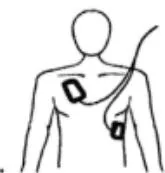
47. What’s the golden time to use an ABD?
B
Tea has long been a popular drink in China. Chinese people love different kinds of tea.
Among them, black tea and white tea from Fujian, green tea from Zhejiang and Anhui, and dark tea from Yunnan are some of the favorites.
In the Song Dynasty (960—1279), tea culture reached new heights. The beauty of the Song tea came alive through “dian cha”. Powdered (粉状的) tea was whisked (搅打) with water into soft “clouds”. White tea was often used to make the “clouds” as white as the moonlight. Tea artists used clean water to draw pictures on them with a teaspoon. The way of serving dian cha became a living art. It later influenced Japanese tea culture. Today, more young people are learning and passing it on.
Yunnan’s dark tea, especially Pu’er, got famous because of the Ancient Tea Horse Road. And it won popularity around the world. In 1976, Frenchman Fred Kempler found a new kind of Pu’er from Yunnan in a Hong Kong shop. In the same year, he visited Yunnan, bought nearly two tons, and began to sell “Yunnan Tuocha” in Europe. Since 1986, Yunnan’s Pu’er tuocha has got many prizes at food expos (博览会) in France, America and other countries. Today you can see an old Australian lady holding a cup of tea of sun-dried Pu’er, though she still enjoys her English-style black tea with milk and sugar. Tea is a bridge of friendship among nations and peoples.
Tea is enjoyed timelessly from ancient to modern times. Each cup of dian cha, white as the moonlight, turned tea into art, and art into eternity (永恒). Tea is also loved globally from the east to the west. Each cup of Pu’er, with the smell of sunshine, turns tea into friendship, and friendship into a shared future.
48. What kind of tea was often used for dian cha according to the passage?
49. When did Fred Kempler begin to sell “Yunnan Tuocha” in Europe?
50. Which sentence uses “globally” with the same meaning as the underlined word? globally /'gləʊbəli/ adv. ①全球地②全面地③总体而言,整体地
51. What is the best title for the passage?
C
(Mr. Wormwood sells stolen cars and tries to get more money by cheating others. Matilda, a book lover, hates that.)
Scene One
One morning, just when Mr. Wormwood was setting off to cheat others again, Matilda walked into his room quietly to get the hat he wore each day to work. She was too short and had to get it with a walking-stick.
Holding the hat in one hand and a bottle of superglue in the other, Matilda put some glue very carefully all round the inside rim (边) of the hat. Then she carefully put the hat back.
Scene Two
That evening, when Mr. Wormwood got home, he cried, “I can’t take my hat off and I have to keep it all day!”
“Don’t be silly,” his wife said. “Come here. I’ll take it off for you.”
“Ow-w-w! Don’t do that! Let go! You’ve nearly killed me!” he shouted.
“What’s the matter?” Matilda was standing at the door with a book in her hand.
Mr. Wormwood looked at her doubtfully, but said nothing.
“It must be superglue. Haven’t I told you not to touch the dirty thing?” Mrs. Wormwood said.
“I haven’t touched it!” Mr. Wormwood shouted. He turned and looked again at Matilda, who looked back at him with large innocent (无辜的) brown eyes.
Scene Three
Mr. Wormwood had to keep his hat on all through dinner. Later, he discovered that the worst thing about having the hat was not to take a shower in it, but to sleep in it. “I expect it will be loose (松动) by the morning and then it’ll be taken off easily,” Mrs. Wormwood said.
Scene Four
But the hat wasn’t loose by the morning. So Mrs. Wormwood cut the thing off his head, bit
by bit, first the top and then the rim.
At breakfast Matilda said to Mr. Wormwood, “You must try to get those bits off your head. They look like little brown insects. And people will think you’ve got lice (虱子).”
“Be quiet!” Mr. Wormwood shouted. “Just keep your mouth shut!”
All in all, it is a most satisfying exercise. But don’t get your hopes up that it has taught the cheater a good lesson.
(Matilda borrows her friend’s parrot (鹦鹉) and…)
52. What did Matilda put inside Mr. Wormwood’s hat?
53. According to Scene Two, which word best describes Matilda?
54. What can we infer from the text?
55


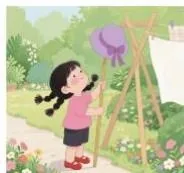

Each picture above matches one scene. Which scene is missing? A.Scene One. B.Scene Two. C.Scene Three. D.Scene Four.
D
“Wow! Look at that! Isn’t it a real fish?” The bionic (仿生) fish, named “Jinlin”, was swimming lively like a real one. It was developed by researchers at Shanghai Ocean University. This invention isn’t just for fun—it shows how humans copy nature to solve problems. That is a science called bionics.
Over millions of years, animals and plants have developed smart ways to survive. For example, kingfishers are experts at moving fast between air and water with very little noise. Through their study, scientists discovered that the birds’ long beaks (喙) enabled this ability. Then they used the knowledge to change the front of the high-speed train. This change cut down noise level, increased speed by 10% and greatly saved energy. This combination (结合) of biology and engineering is the key to success in bionics. And it has set the stage for the rise of other new technologies.
Driven by robotics and AI, bionics has grown rapidly. The AI-powered bionic fish “Jinlin” can be used for environmental protection and deep sea exploration. In medicine, bionic arms can work similarly to real arms. Sensors allow the user to “feel” touch and pressure. Motors help the bionic arms make movements, like human muscles (肌肉). With AI, the bionic arms are able to “learn” new tasks and become smarter over time. These inventions are examples to show how bionics bridges biology and new technologies to solve humans’ problems.
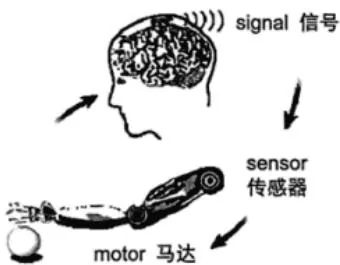
Although so much progress has been made, bionics faces challenges. Nature’s designs are hard to copy perfectly. As for bionic arms, one key area of development is Brain-Computer Interface (脑机接口). More work on direct communication between the brain and bionic arms is required to control movements as naturally as real arms. Researchers are also working on creating new materials and structures which can sense and repair themselves.
While there’s still a long way to go, the future of bionics is full of possibilities. Stay hungry. Stay foolish. Maybe you’ll be the next one to change the world!
56. Why does the writer mention “Jinlin” at the beginning of the passage?
57. What can we learn from Paragraph 3?
C.Motors allow the bionic arms to make movements. D.Sensors help bionic arms learn new tasks over time.
58.According to Paragraph 4, how would scientists make bionic arms more like real ones? ① By connecting motors with smart phones. ② By developing new materials and structures. ③ By improving Brain-Computer Interface.
④ By changing the shape and look of bionic arms. A.①② B.②③ C.①④ D.③④
59. Which of the following shows the use of bionics?
V. 口语应用。(每小题 2分, 共 10分)
阅读下面对话,从7个选项中选择 5个恰当的句子完成此对话,并把答题卡上对应题目的答 案标号涂黑。 A: Hi, I’m Chris. Nice to meet you! B: Oh, hi, I’m Amy. 60 A: So, Amy. Why are you interested in joining our group? B: Well, I want to do something for our environment. A: 61 We are all trying to live a low-carbon (低碳) life.
B: A low-carbon life? What is that?
A: It’s a green lifestyle. 62 We still buy daily things like food and drinks. But we try not to buy new clothes or shoes.
A: Well, we eat less meat and we prefer more local food. B: I can do that. And I often take a bus to school. A: That’s great. Then welcome to join us. B: 64 Thanks.
A.I’d love to. B.Let’s eat together. C.It’s great to see you, too. D.We start with less shopping. E.Can you lend me a bike? F.Anything else?
G.This group is just right for you.
第Ⅱ卷(共 50 分)
VI. 任务型阅读。(65-66 小题, 每小题 2 分; 67-68 小题, 每小题 3 分; 共 10 分)阅读下文并回答问题。
Dear friends,
Last month, we started the “Nature and Me” activity. What did you see and do during your time with nature? And how did you feel? Please share your stories.
Steve
8:15 p. m. 31 May
I disliked hiking in the past, but now I enjoy it. My father and I had a hiking trip on MacLehose Trail in Hong Kong. The journey was harder than I expected. My legs started burning after just 30 minutes. But as we climbed higher, the amazing views—green hills, golden beaches, and endless ocean—seemed under my feet. There’s an old Chinese saying, “When you climb to the top, all other mountains seem small.” That’s exactly how I felt. Every drop of sweat counts!
Reply here.
Lan

8: 17 p. m. 31 May
“I feel free and peaceful.” This was my answer to my friend when she asked me how I felt after an afternoon walk. As we walked through the park, I noticed all those fallen leaves with different shapes and colors lying on the ground. I picked some up and made them into a picture.
You know what they say, “The best thing in life is free.” That’s so true. By walking, I got good exercise. By collecting these little treasures, I started paying attention to all the small things around me that I used to miss. It was like an escape (逃离) from what was troubling me.
Reply here.
12 minutes ago
During the holiday, my family and I went to Crystal Waterfall. It was amazing! I stood near the falls, hearing the rush of water and feeling the cool mist (水雾). The sound of the water was actually super relaxing. It felt like all my tiredness and worries were being washed away.
Back home, I even downloaded the recordings of waterfalls online. They can help me sleep better!
65.Does Steve like hiking now?
66.What did Lan pick up during the afternoon walk?
67.What have the three people learned in common from their trips?
68.What do you think of their experiences and why? Choose one to reply. (about 30 words)
VII.完成句子。(69-72 小题,每空 1 分;73 小题 2 分;共 10 分)
根据所给提示, 完成句子。69-72小题, 每空一词, 含缩略词, 73 小题请将完整的
句子写在答题卡上对应的位置。
69.Gina is talking to her friend on the phone.(改为否定句)
Gina to her friend on the phone.
70.Andy paid 30 yuan for his new book.(对划线部分提问)
did Andy pay for his new book?
71.Sorry, you are not old enough to drive.(改为同义句)
Sorry, you are young drive.
72.面对困难, 我们应该永不放弃。(完成译句)
We should never in the face of difficulties.
73.to be, want, a writer, I, in the future(连词成句)
VIII. 概要补全。(75 和 77 小题, 每小题 2 分; 74 和 76 小题, 每小题 3 分; 共 10分)
阅读文章,用恰当的短语或句子补全概要。补全部分总词数不超过30词,不能照抄原文连续超过 3个词。
When you make a mistake or say something wrong, it’s easy to be hard on yourself. Then stress is caused. Feelings of anger, disappointment and sadness come along. That’s why such stress needs to be dealt with.
Max, a 14-year-old boy, used to be very competitive and always felt stressed. Now he is learning to give himself care and kindness. When he doesn’t win or get the top marks, he talks to himself, “It’s OK not to be perfect.” He knows he always does his best and that is enough.
What Max does is called self-compassion (自我和解). With self-compassion, you treat yourself kindly like a friend. It allows you to forgive (原谅) yourself when you mess up or fail. After feelings of guilt (愧疚) go away, you get more relaxed and you can think more clearly. This way self-compassion makes you move forward. Many studies have shown it is of great help.
However, some disagree. They argue that self-compassion leads people to be less active. But Breines and Chen’s study had a different result. They gave students a difficult word test. The students were given the chance to study for a second test. They found those who were compassionate toward their failure spent more time preparing.
Experts suggest that you should write a letter to yourself, describing the situation that causes your pain and accepting how you feel. Or you can do something you like to make yourself feel at peace. Suzy Reading, a psychologist (心理学家), suggests using a “gentle touch” like placing one both hands on your heart, so you will feel safe and loved.
Being hard on yourself causes stress. However, 74 . Se-compassion means being kind to yourself. With its help, you will have more relaxation and a clearer mind so that 75 . Some think differently, but a study shows that 76 . To practice self-compassion, some 77 are suggested by experts.
IX. 书面表达。(满分 20分)
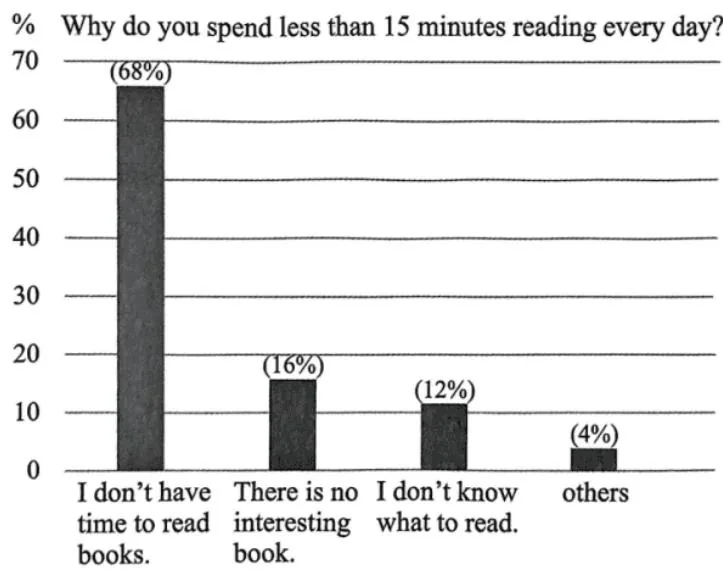
78.某权威英语阅读网站发布报告:从小学到高中毕业,如每天坚持阅读 15 分钟,学生的累积阅读量可达 680万词;不足15分钟,则只有约 150万词。你校英语社团在全校每天阅读时间不足15 分钟的学生中进行原因调查后(结果见下图),针对最突出的原因,以“Everyone can have time to read”为主题发起征文。请你简述调查结果,提出行之有效的建议(1—2条)参与投稿。
要求
80—120词,开头已给出,不计入总词数;
文中不能出现自己的姓名和所在学校的名称。参考信息
spare moments (碎片化时间) (during lunch breaks, while waiting, before bed…)
use/ create an AI reading agent (智能体) (make plans, remind sb. to read, manage time well…)
less screen time (less time on the phone…)
be a better learner (focus well, learn better in less time…)
…
According to the survey, 16% show little interest in reading.
1.A 【原文】Good morning boys and girls.
2.C 【原文】Don’t run in the hall please.
3.A 【原文】Can you help me with the box?
4.C 【原文】I’m sorry, I broke your pencil.
5.B 【原文】What about going to a movie this afternoon?
6.B 【原文】You look so good in the dress.
【原文】W: Bob, the word on your back looks cool. M: It’s journey. Every journey begins with the first step. Question: how is the word on Bob’s back pronounced?
8.B 【原文】M: Linda, what color do you like best?
W: Red, of course. Question: What is Linda’s favorite color?
9.B 【原文】W: Excuse me, can you tell me the way to the bank. M: Sure. Go along and turn left at the crossing. Question: where is the woman going?
10.A
【原文】W: Look who is over there. M: It must be Lucy. She always comes first. Question: Who always comes first.
11.B 【原文】W: Mike, you have changed a lot.
M: That’s right, I used to be short now I’m much taller. Question: What did Mike used to be like?
【原文】M: Mom, it’s ten o’clock. Shall we go now. W: Just a moment, dear. Let’s leave fifteen minutes later. Question: When will they leave?
13.A
14.C
【原文】W: Hi, Li hua. Anything interesting in the newspaper? M: Yes, I’m reading a report. W: What’s it about?
M: It tells how China helps other countries.We teach them to grow rice, help them build railways and offer them free medicine.
W: Wow, so they can live better. M: And we lend some countries soil from the moon for research.
W: We are doing a lot for the world. I feel so proud. M: Me too.
15.B
16.A
【原文】M: Hi, Emma, Where are you? W: Hey Mark, I’m in the kitchen. I’m preparing some food for the party. M: Do you need any help? W: That will be great, M: What do you need? W: Could you cut these potatoes into pieces? M: No problem. Ha ha W: Why are you laughing?
M: Ha, I’m laughing at your face. You got some vegetable pieces on your face.
17.C
18.A
19.C
20.A
【原文】
Hello boys and girls. Glad to meet you here. I’m Sandy, your PE teacher. Here are some important things you must know.
First, there are rules. They are to make sure everyone is safe. Especially when we are doing sports. I believe none of you will break them. Second, about the exercise plans. This term will focus on three sports: Volleyball, Swimming and Kung fu. Volleyball is a team sport. Once a month, we will choose some students to have a volleyball match with the team from other schools. In May, we will have a swimming test. Everyone needs to swim fifty meters. Speed is not a problem. And by the end of the term in June, we will have a Kung fu show. We may invite one hundred parents to watch.
You know, this is the year of weight management. Let’s enjoy sports and keep fit.
21. don’t want
22. too loudly
23.honest
24. better relationship
【原文】
Good morning everyone. We may have experienced that when we speak, people don’t want to listen to us. The reason is that we probably have some bad habits. Like lying to people, speaking ill of others, and speaking too loudly.
As a result, we may have fewer friends and more worries. Then what can we do to make people want to listen. Firstly, be a person who doesn’t lie. Be true in what we say. Next, try to keep our words to what we say and become someone people can trust. Also, when others make progress or achieve something, we should congratulate them from the bottom of our heart. It means wishing people well. Finally, we should speak in a proper way.
Try to make our voice sound warm and comfortable, like smooth hot chocolate, and pay attention to our speed of speaking. We can speak quickly to show our excitement or slow down to help people notice something important.
Of course, we can’t please everyone. But try the suggestions above and the world around will surely sound beautiful. Thanks for listening.
25.A
26.B
27.C
28.B
29.C
30.A
31.C
32.B
33.A
34.A
答案与详细解析
重庆市 2025 年初中学业水平暨高中招生考试英语试题
(全卷共九个大题 满分: 150 分 考试时间: 120 分钟)
注意事项:
试题的答案书写在答题卡上, 不得在试题卷上直接作答。
作答前认真阅读答题卡上的注意事项。
考试结束, 由监考人员将试题卷和答题卡一并收回。
第Ⅰ卷(共 100 分)
I. 听力测试。(共 35 分)
第一节(每小题 1 分, 共 6 分)
听一遍。根据你所听到的句子, 从 A、B、C三个选项中选出最恰当的答语, 并把答题卡上对应题目的答案标号涂黑。
1 A.Good morning. B. Good afternoon. C.Good luck.
2 A.Well done. B.I hope so.
3.
4 A.Here you are. B.Glad to hear that. C.It doesn’t matter.
5 A.Don’t mention it. B.Sounds great! C.Be careful!
6 A.Take it easy. B.Thank you. C.Have fun.
第二节(每小题
1.5 分, 共 9 分)
听一遍。根据你所听到的对话和问题, 从 A、B、C三个选项中选出正确答案, 并把答题卡上对应题目的答案标号涂黑。
7 A./‘dʒɜːni/. B./dʒei/. C./dʒʌdʒ/.
8 A.Blue. B.Red. C.Yellow.
9.
10 A.Lucy. B.Lily. C.Mary.
11 A.Thin. B.Short. C.Tall.
12..
A
B
C
第三节(每小题
1.5 分, 共 6 分)
听两遍。根据你所听到的长对话, 从 A、B、C三个选项中选出正确答案, 并把答题卡上对应题目的答案标号涂黑。
听材料,回答问题。
13. What is Li Hua doing now?
14. How do they both feel?
听材料, 回答问题。
15. Where is Emma now?
16. Why is Mark laughing?
第四节(每小题
1.5分, 共 6分)
听两遍。根据你所听到的短文内容,从A、B、C 三个选项中选出正确答案,并把答题卡上对应题目的答案标号涂黑。
17. How often will the students have a volleyball match?
18. How far does everyone need to swim in the test?
19. What will the students have in June?
20. What does the speaker expect the students to be like?
第五节(每小题 2 分, 共 8 分)
听两遍。根据你所听到的演讲内容,在横线处补全笔记。每空1 词,并把答案填写在答题卡上对应的位置。Make People Want to Listen
21.People to listen.
22.Some bad habits: √… √speaking ill… √speaking
23.Some suggestions: √be an person √keep…words √wish…well √speak…proper…
24.The speaker thinks these suggestions can help us have better conversations, so we will have a with people around us.
II. 语法选择。(每小题 1分, 共 10分)
根据短文内容, 从 A、B、C三个选项中选出一个语法正确的答案, 并把答题卡上对应题目的答案标号涂黑。
Li Liang has always been interested in science since childhood. He’s good solving problems in daily life. It is dream to make people’s lives better.
One night when he was 11, he the news on TV with his parents. He heard that there were harmful chemicals (化学物质) left in the vegetables people ate in a village nearby. Parents and were worried about their food safety. He couldn’t sleep that night he kept thinking about the kids of his age who didn’t have safe vegetables. He decided something to help. He spent over a year in researching and testing. Finally, a tool by him. It could show results fast, so people would know the food was safe.
Now, as college student, he gives public talks and holds science workshops (工作 坊) to share his research methods. Through his work, more and more students are following in his footsteps.
25.
26.
27.
28.
29.
30.
31.
32.
33.
34.
III. 完形填空。(每小题
1.5分, 共 15分)
根据短文内容, 从 A、B、C、D四个选项中选出一个能填入相应空格的最佳答案, 并把答题卡上对应题目的答案标号涂黑。
The sunlight came through the windows, bringing in the hot summer air. I saw a long line of people at the medicine pickup counter (取药处). I took a deep breath to cool down.
I joined the line to for my turn. The weight of my coming baby made it for me to stand straight, and my legs felt heavy. I raised my head and saw there were still quite a few people ahead. Some were playing with their phones and some were talking quietly. The line moved so
I began to feel weaker in my . I couldn’t stand for long. “Should I ask the one at the front for help? What if he ? He’s been waiting for a long time, too. Will the other people agree?” I thought to myself, “But I …” My forehead was starting to sweat (冒汗).
I knew I couldn’t wait. I walked up to the person in the line and asked in a low voice, “Excuse me, could I go first? I am not feeling so well.”
The young man looked at me in surprise he saw my belly (肚子). He agreed. Almost no one noticed what happened. I thought he would remain behind me. Instead, he moved straight to the end.
The second person her phone. She looked at me and looked back at the young man. Then she moved to the back, too. Then the third one, then the fourth…until the young man came right me.
I felt a gentle wind blowing across my face, and the summer heat was gone with the wind.
35.
36.
37.
38.
39.
40.
41.
42.
43.
44.
IV. 阅读理解。(每小题 2分, 共 30分)
阅读下列材料, 从 A、B、C、D四个选项中选出最佳答案, 并把答题卡上对应题目的答案标号涂黑。
A
When someone’s heart suddenly stops, we can use an AED to save him or her. It can be found in public places and it is easy to use. Turn it on and follow the voice instructions. Here are some key steps.
Place one pad onto the upper-right chest(胸膛). Place the other onto the lower-left chest.
Connect the pads to the AED.
Don’t touch the patient! Wait for the result of the examination.
Press the button when a shock is advised.
Give CPR(心肺复苏)if needed.
Remember: It’s best to treat the patient within the “Golden 4 Minutes”! Time matters! If an AED is not around, send someone to get one and give CPR while waiting. Don’t forget to call
45. When is an AED used?
46.Where should the pads be placed on the patient?
A
B
C
D
47. What’s the golden time to use an ABD?
B
Tea has long been a popular drink in China. Chinese people love different kinds of tea.
Among them, black tea and white tea from Fujian, green tea from Zhejiang and Anhui, and dark tea from Yunnan are some of the favorites.
In the Song Dynasty (960—1279), tea culture reached new heights. The beauty of the Song tea came alive through “dian cha”. Powdered (粉状的) tea was whisked (搅打) with water into soft “clouds”. White tea was often used to make the “clouds” as white as the moonlight. Tea artists used clean water to draw pictures on them with a teaspoon. The way of serving dian cha became a living art. It later influenced Japanese tea culture. Today, more young people are learning and passing it on.
Yunnan’s dark tea, especially Pu’er, got famous because of the Ancient Tea Horse Road. And it won popularity around the world. In 1976, Frenchman Fred Kempler found a new kind of Pu’er from Yunnan in a Hong Kong shop. In the same year, he visited Yunnan, bought nearly two tons, and began to sell “Yunnan Tuocha” in Europe. Since 1986, Yunnan’s Pu’er tuocha has got many prizes at food expos (博览会) in France, America and other countries. Today you can see an old Australian lady holding a cup of tea of sun-dried Pu’er, though she still enjoys her English-style black tea with milk and sugar. Tea is a bridge of friendship among nations and peoples.
Tea is enjoyed timelessly from ancient to modern times. Each cup of dian cha, white as the moonlight, turned tea into art, and art into eternity (永恒). Tea is also loved globally from the east to the west. Each cup of Pu’er, with the smell of sunshine, turns tea into friendship, and friendship into a shared future.
48. What kind of tea was often used for dian cha according to the passage?
49. When did Fred Kempler begin to sell “Yunnan Tuocha” in Europe?
50. Which sentence uses “globally” with the same meaning as the underlined word? globally /'gləʊbəli/ adv. ①全球地②全面地③总体而言,整体地
51. What is the best title for the passage?
C
(Mr. Wormwood sells stolen cars and tries to get more money by cheating others. Matilda, a book lover, hates that.)
Scene One
One morning, just when Mr. Wormwood was setting off to cheat others again, Matilda walked into his room quietly to get the hat he wore each day to work. She was too short and had to get it with a walking-stick.
Holding the hat in one hand and a bottle of superglue in the other, Matilda put some glue very carefully all round the inside rim (边) of the hat. Then she carefully put the hat back.
Scene Two
That evening, when Mr. Wormwood got home, he cried, “I can’t take my hat off and I have to keep it all day!”
“Don’t be silly,” his wife said. “Come here. I’ll take it off for you.”
“Ow-w-w! Don’t do that! Let go! You’ve nearly killed me!” he shouted.
“What’s the matter?” Matilda was standing at the door with a book in her hand.
Mr. Wormwood looked at her doubtfully, but said nothing.
“It must be superglue. Haven’t I told you not to touch the dirty thing?” Mrs. Wormwood said.
“I haven’t touched it!” Mr. Wormwood shouted. He turned and looked again at Matilda, who looked back at him with large innocent (无辜的) brown eyes.
Scene Three
Mr. Wormwood had to keep his hat on all through dinner. Later, he discovered that the worst thing about having the hat was not to take a shower in it, but to sleep in it. “I expect it will be loose (松动) by the morning and then it’ll be taken off easily,” Mrs. Wormwood said.
Scene Four
But the hat wasn’t loose by the morning. So Mrs. Wormwood cut the thing off his head, bit
by bit, first the top and then the rim.
At breakfast Matilda said to Mr. Wormwood, “You must try to get those bits off your head. They look like little brown insects. And people will think you’ve got lice (虱子).”
“Be quiet!” Mr. Wormwood shouted. “Just keep your mouth shut!”
All in all, it is a most satisfying exercise. But don’t get your hopes up that it has taught the cheater a good lesson.
(Matilda borrows her friend’s parrot (鹦鹉) and…)
52. What did Matilda put inside Mr. Wormwood’s hat?
53. According to Scene Two, which word best describes Matilda?
54. What can we infer from the text?
55
Each picture above matches one scene. Which scene is missing? A.Scene One. B.Scene Two. C.Scene Three. D.Scene Four.
D
“Wow! Look at that! Isn’t it a real fish?” The bionic (仿生) fish, named “Jinlin”, was swimming lively like a real one. It was developed by researchers at Shanghai Ocean University. This invention isn’t just for fun—it shows how humans copy nature to solve problems. That is a science called bionics.
Over millions of years, animals and plants have developed smart ways to survive. For example, kingfishers are experts at moving fast between air and water with very little noise. Through their study, scientists discovered that the birds’ long beaks (喙) enabled this ability. Then they used the knowledge to change the front of the high-speed train. This change cut down noise level, increased speed by 10% and greatly saved energy. This combination (结合) of biology and engineering is the key to success in bionics. And it has set the stage for the rise of other new technologies.
Driven by robotics and AI, bionics has grown rapidly. The AI-powered bionic fish “Jinlin” can be used for environmental protection and deep sea exploration. In medicine, bionic arms can work similarly to real arms. Sensors allow the user to “feel” touch and pressure. Motors help the bionic arms make movements, like human muscles (肌肉). With AI, the bionic arms are able to “learn” new tasks and become smarter over time. These inventions are examples to show how bionics bridges biology and new technologies to solve humans’ problems.
Although so much progress has been made, bionics faces challenges. Nature’s designs are hard to copy perfectly. As for bionic arms, one key area of development is Brain-Computer Interface (脑机接口). More work on direct communication between the brain and bionic arms is required to control movements as naturally as real arms. Researchers are also working on creating new materials and structures which can sense and repair themselves.
While there’s still a long way to go, the future of bionics is full of possibilities. Stay hungry. Stay foolish. Maybe you’ll be the next one to change the world!
56. Why does the writer mention “Jinlin” at the beginning of the passage?
57. What can we learn from Paragraph 3?
C.Motors allow the bionic arms to make movements. D.Sensors help bionic arms learn new tasks over time.
58.According to Paragraph 4, how would scientists make bionic arms more like real ones? ① By connecting motors with smart phones. ② By developing new materials and structures. ③ By improving Brain-Computer Interface.
④ By changing the shape and look of bionic arms. A.①② B.②③ C.①④ D.③④
59. Which of the following shows the use of bionics?
V. 口语应用。(每小题 2分, 共 10分)
阅读下面对话,从7个选项中选择 5个恰当的句子完成此对话,并把答题卡上对应题目的答 案标号涂黑。 A: Hi, I’m Chris. Nice to meet you! B: Oh, hi, I’m Amy. 60 A: So, Amy. Why are you interested in joining our group? B: Well, I want to do something for our environment. A: 61 We are all trying to live a low-carbon (低碳) life.
B: A low-carbon life? What is that?
A: It’s a green lifestyle. 62 We still buy daily things like food and drinks. But we try not to buy new clothes or shoes.
A: Well, we eat less meat and we prefer more local food. B: I can do that. And I often take a bus to school. A: That’s great. Then welcome to join us. B: 64 Thanks.
A.I’d love to. B.Let’s eat together. C.It’s great to see you, too. D.We start with less shopping. E.Can you lend me a bike? F.Anything else?
G.This group is just right for you.
第Ⅱ卷(共 50 分)
VI. 任务型阅读。(65-66 小题, 每小题 2 分; 67-68 小题, 每小题 3 分; 共 10 分)阅读下文并回答问题。
Dear friends,
Last month, we started the “Nature and Me” activity. What did you see and do during your time with nature? And how did you feel? Please share your stories.
Steve
8:15 p. m. 31 May
I disliked hiking in the past, but now I enjoy it. My father and I had a hiking trip on MacLehose Trail in Hong Kong. The journey was harder than I expected. My legs started burning after just 30 minutes. But as we climbed higher, the amazing views—green hills, golden beaches, and endless ocean—seemed under my feet. There’s an old Chinese saying, “When you climb to the top, all other mountains seem small.” That’s exactly how I felt. Every drop of sweat counts!
Reply here.
Lan
8: 17 p. m. 31 May
“I feel free and peaceful.” This was my answer to my friend when she asked me how I felt after an afternoon walk. As we walked through the park, I noticed all those fallen leaves with different shapes and colors lying on the ground. I picked some up and made them into a picture.
You know what they say, “The best thing in life is free.” That’s so true. By walking, I got good exercise. By collecting these little treasures, I started paying attention to all the small things around me that I used to miss. It was like an escape (逃离) from what was troubling me.
Reply here.
12 minutes ago
During the holiday, my family and I went to Crystal Waterfall. It was amazing! I stood near the falls, hearing the rush of water and feeling the cool mist (水雾). The sound of the water was actually super relaxing. It felt like all my tiredness and worries were being washed away.
Back home, I even downloaded the recordings of waterfalls online. They can help me sleep better!
65.Does Steve like hiking now?
66.What did Lan pick up during the afternoon walk?
67.What have the three people learned in common from their trips?
68.What do you think of their experiences and why? Choose one to reply. (about 30 words)
VII.完成句子。(69-72 小题,每空 1 分;73 小题 2 分;共 10 分)
根据所给提示, 完成句子。69-72小题, 每空一词, 含缩略词, 73 小题请将完整的
句子写在答题卡上对应的位置。
69.Gina is talking to her friend on the phone.(改为否定句)
Gina to her friend on the phone.
70.Andy paid 30 yuan for his new book.(对划线部分提问)
did Andy pay for his new book?
71.Sorry, you are not old enough to drive.(改为同义句)
Sorry, you are young drive.
72.面对困难, 我们应该永不放弃。(完成译句)
We should never in the face of difficulties.
73.to be, want, a writer, I, in the future(连词成句)
VIII. 概要补全。(75 和 77 小题, 每小题 2 分; 74 和 76 小题, 每小题 3 分; 共 10分)
阅读文章,用恰当的短语或句子补全概要。补全部分总词数不超过30词,不能照抄原文连续超过 3个词。
When you make a mistake or say something wrong, it’s easy to be hard on yourself. Then stress is caused. Feelings of anger, disappointment and sadness come along. That’s why such stress needs to be dealt with.
Max, a 14-year-old boy, used to be very competitive and always felt stressed. Now he is learning to give himself care and kindness. When he doesn’t win or get the top marks, he talks to himself, “It’s OK not to be perfect.” He knows he always does his best and that is enough.
What Max does is called self-compassion (自我和解). With self-compassion, you treat yourself kindly like a friend. It allows you to forgive (原谅) yourself when you mess up or fail. After feelings of guilt (愧疚) go away, you get more relaxed and you can think more clearly. This way self-compassion makes you move forward. Many studies have shown it is of great help.
However, some disagree. They argue that self-compassion leads people to be less active. But Breines and Chen’s study had a different result. They gave students a difficult word test. The students were given the chance to study for a second test. They found those who were compassionate toward their failure spent more time preparing.
Experts suggest that you should write a letter to yourself, describing the situation that causes your pain and accepting how you feel. Or you can do something you like to make yourself feel at peace. Suzy Reading, a psychologist (心理学家), suggests using a “gentle touch” like placing one both hands on your heart, so you will feel safe and loved.
Being hard on yourself causes stress. However, 74 . Se-compassion means being kind to yourself. With its help, you will have more relaxation and a clearer mind so that 75 . Some think differently, but a study shows that 76 . To practice self-compassion, some 77 are suggested by experts.
IX. 书面表达。(满分 20分)
78.某权威英语阅读网站发布报告:从小学到高中毕业,如每天坚持阅读 15 分钟,学生的累积阅读量可达 680万词;不足15分钟,则只有约 150万词。你校英语社团在全校每天阅读时间不足15 分钟的学生中进行原因调查后(结果见下图),针对最突出的原因,以“Everyone can have time to read”为主题发起征文。请你简述调查结果,提出行之有效的建议(1—2条)参与投稿。
要求
80—120词,开头已给出,不计入总词数;
文中不能出现自己的姓名和所在学校的名称。参考信息
spare moments (碎片化时间) (during lunch breaks, while waiting, before bed…)
use/ create an AI reading agent (智能体) (make plans, remind sb. to read, manage time well…)
less screen time (less time on the phone…)
be a better learner (focus well, learn better in less time…)
…
According to the survey, 16% show little interest in reading.
1.A 【原文】Good morning boys and girls.
2.C 【原文】Don’t run in the hall please.
3.A 【原文】Can you help me with the box?
4.C 【原文】I’m sorry, I broke your pencil.
5.B 【原文】What about going to a movie this afternoon?
6.B 【原文】You look so good in the dress.
【原文】W: Bob, the word on your back looks cool. M: It’s journey. Every journey begins with the first step. Question: how is the word on Bob’s back pronounced?
8.B 【原文】M: Linda, what color do you like best?
W: Red, of course. Question: What is Linda’s favorite color?
9.B 【原文】W: Excuse me, can you tell me the way to the bank. M: Sure. Go along and turn left at the crossing. Question: where is the woman going?
10.A
【原文】W: Look who is over there. M: It must be Lucy. She always comes first. Question: Who always comes first.
11.B 【原文】W: Mike, you have changed a lot.
M: That’s right, I used to be short now I’m much taller. Question: What did Mike used to be like?
【原文】M: Mom, it’s ten o’clock. Shall we go now. W: Just a moment, dear. Let’s leave fifteen minutes later. Question: When will they leave?
13.A
14.C
【原文】W: Hi, Li hua. Anything interesting in the newspaper? M: Yes, I’m reading a report. W: What’s it about?
M: It tells how China helps other countries.We teach them to grow rice, help them build railways and offer them free medicine.
W: Wow, so they can live better. M: And we lend some countries soil from the moon for research.
W: We are doing a lot for the world. I feel so proud. M: Me too.
15.B
16.A
【原文】M: Hi, Emma, Where are you? W: Hey Mark, I’m in the kitchen. I’m preparing some food for the party. M: Do you need any help? W: That will be great, M: What do you need? W: Could you cut these potatoes into pieces? M: No problem. Ha ha W: Why are you laughing?
M: Ha, I’m laughing at your face. You got some vegetable pieces on your face.
17.C
18.A
19.C
20.A
【原文】
Hello boys and girls. Glad to meet you here. I’m Sandy, your PE teacher. Here are some important things you must know.
First, there are rules. They are to make sure everyone is safe. Especially when we are doing sports. I believe none of you will break them. Second, about the exercise plans. This term will focus on three sports: Volleyball, Swimming and Kung fu. Volleyball is a team sport. Once a month, we will choose some students to have a volleyball match with the team from other schools. In May, we will have a swimming test. Everyone needs to swim fifty meters. Speed is not a problem. And by the end of the term in June, we will have a Kung fu show. We may invite one hundred parents to watch.
You know, this is the year of weight management. Let’s enjoy sports and keep fit.
21. don’t want
22. too loudly
23.honest
24. better relationship
【原文】
Good morning everyone. We may have experienced that when we speak, people don’t want to listen to us. The reason is that we probably have some bad habits. Like lying to people, speaking ill of others, and speaking too loudly.
As a result, we may have fewer friends and more worries. Then what can we do to make people want to listen. Firstly, be a person who doesn’t lie. Be true in what we say. Next, try to keep our words to what we say and become someone people can trust. Also, when others make progress or achieve something, we should congratulate them from the bottom of our heart. It means wishing people well. Finally, we should speak in a proper way.
Try to make our voice sound warm and comfortable, like smooth hot chocolate, and pay attention to our speed of speaking. We can speak quickly to show our excitement or slow down to help people notice something important.
Of course, we can’t please everyone. But try the suggestions above and the world around will surely sound beautiful. Thanks for listening.
25.A
26.B
27.C
28.B
29.C
30.A
31.C
32.B
33.A
34.A
【导语】本文讲述了李亮从一个对科学感兴趣的小孩,通过发明检测食品安全的工具,成长为激励他人的大学生。
25.句意:他擅长解决日常生活中的问题。
at 在;to 到;for 为了。根据“solving problems in daily life”可知此处指擅长解决问题,be goodat“擅长”。故选A。
26.句意:让人们的生活变得更好是他的梦想。
he他(主格);his他的(形容词性物主代词);him他(宾格)。修饰名词dream用形容词性物主代词。故选B。
27.句意:在他11岁的一个晚上,他和父母一起观看了电视上的新闻。
watch观看(动词原形);watches观看(第三人称单数);watched观看(过去式)。根据“Onenight when he was 11”可知句子用一般过去时,动词用过去式。故选 C。
28.句意:父母和孩子们都很担心食品安全。
kid 孩子;kids 孩子们;kids’孩子们的。根据“Parents and”可知此处用名词复数。故选 B。
29.句意:那天晚上他睡不着,因为他一直在想那些和他同龄却没有安全蔬菜的孩子们。
or或者;but但是;because 因为。后句是前句的原因,用because连接。故选C。
30.句意:他决定做些事情来帮忙。
to do 做(动词不定式);doing 做(现在分词);do 做(动词原形)。decide to do sth.“决定做某事”。故选A。
31.句意:最终,他发明了一个工具。invented 发明(过去式);is invented 被发明(一般现在时的被动语态);was invented 被发明(一般过去时的被动语态)。主语 a tool和谓语invent之间是被动关系,且动作发生在过去,用一般过去时的被动语态。故选 C。
32.句意:这个工具可以快速显示结果,所以人们会知道食物是否安全。
what 什么;whether 是否;which 哪一个。根据“the food was safe.”可知是知道食物是否安全。故选B。
33.句意:现在,作为一名大学生,他做公开演讲并举办科学工作坊来分享他的研究方法。a一个(用于辅音音素前);an一个(用于元音音素前);the这个/那个(定冠词)。此处泛指“一名大学生”,college以辅音音素开头。故选A。
34.句意:通过他的努力工作,越来越多的学生开始效仿他。
hard努力的;harder更努力的;hardly 几乎不。根据“work”可知此处修饰名词用形容词,且无比较之意,用原级。故选 A。
35.A
36.B
37.C
38.D
39.B
40.C
41.A
42.C
43.B
44.D
【导语】本文讲述了一位孕妇在取药处排队时因身体不适请求优先获得帮助,最终得到队伍中人们善意让行的温暖故事。
35.句意:我深吸了一口气以便让自己冷静下来。
myself 我自己;yourself 你自己;himself 他自己;herself 她自己。主语是 I,此处用反身代词myself指代自己。故选A。
36.句意:我排队等待轮到自己。
fight 打斗;wait 等待;call 打电话;ask 问。根据“joined the line”可知是排队等待。故选 B。
37.句意:即将出生的孩子的重量让我难以站直,我的腿也感觉很沉重。
easy 容易的;possible 可能的;difficult 困难的;important 重要的。根据“The weight of my comingbaby”可知,孕妇身体负担重肚,很难站直。故选C。
38.句意:队伍移动得非常缓慢。
carefully 小心地;successfully 成功地;quickly 快速地;slowly 缓慢地。根据下文“I began to feelweaker”可知,作者身体开始虚弱,可见作者排队等了很长一段时间,队伍移动得慢。故选D。
39.句意:我的腿开始感到无力。
stomach 胃;legs 腿;arms 手臂;head 头。根据上文“my legs felt heavy”可知,作者的腿感觉无力。故选B。
40.句意:如果他拒绝呢?
agrees 同意;smiles 笑;refuses 拒绝;cries 哭。根据下文“He’s been waiting for a long time, too.”可知,作者猜想前面的人也等了很长一段时间,所以猜想他会拒绝。故选C。
41.句意:我走向队伍中的第一个人,低声地问道:“抱歉,我可以先去吗?我现在感觉不舒服。”
first 首先;second 第二;third 第三;fourth 第四。根据下文“The second person”、“Then the thirdone, then the fourth”可知,作者是从第一个人问起的。故选 A。
42.句意:年轻人惊讶地看着我,直到他看到我的肚子。
if 如果;unless 除非;until 直到;though 尽管。根据“he saw my belly”可知,直到他看到作者的肚子为止,他讶异于作者提出这样的请求。故选 C。
43.句意:第二个人从她的手机上抬起头来看。
looked out at 朝外看;looked up from 从……中抬起头往上看;looked down on 看不起;looked around for朝周围看。根据“her phone”可知,第二个人原来在看手机,这会抬起头来看到作 者。故选B。
44.句意:然后第三个,第四个……直到那个年轻人直接排到了我后面。
far from 离……远;before 在……之前;across from 在……对面;behind 在……后面。根据 上文“ I thought he would remain behind me. Instead, he moved straight to the end.…
Then she moved to the back, too. Then the third one, then the fourth…”可知,原先排在作者前面的人都依次往队伍后面站,因此到最后那个年轻人就站在了作者的后面。故选 D。
【导语】本文主要介绍了自动体外除颤仪(AED)的使用时机、电极贴片的正确放置位置以及抢救心脏骤停患者的关键时间段“黄金4分钟”。
45.细节理解题。根据“When someone’s heart suddenly stops, we can use an AED to save him orher.”可知,当某人的心脏突然停止跳动时,应该使用自动体外除颤仪。故选A。
46.推理判断题。根据步骤 1 的描述“Place one pad onto the upper-right chest (胸膛). Place theother onto the lower-left chest.” 可知,一个贴片应放置在患者的右上胸部,另一个贴片应放置在左下胸部。观察四个选项中的图示,只有选项D 正确地展示了这种放置方式。故选D。
47.细节理解题。根据“Remember: It’s best to treat the patient within the ‘Golden 4 Minutes’!”可知,在心脏骤停后的前4 分钟内进行治疗是最关键的时间段。故选A。
48.D
49.B
50.B
51.A
【导语】本文涵盖茶的种类、点茶艺术(如“茶变艺术”)、普洱茶全球传播(如“友谊桥梁”),强调茶超越饮品本身的多重价值。
48.细节理解题。根据“White tea was often used to make the ‘clouds’ as white as the moonlight.” 可知,白茶常被用于制作点茶的“云纹”。故选D。
49.细节理解题。根据“In 1976, Frenchman Fred Kempler found a new kind of Pu’er from Yunnan in a Hong Kong shop. In the same year, he visited Yunnan, bought nearly two tons, and began to sell ‘Yunnan Tuocha’ in Europe.”可知,欧洲销售“云南沱茶”的时间是在 1976 年。故选 B。
50.词句猜测题。根据“Tea is also loved globally from the east to the west.”可知,茶在全球范围内被喜爱,globally 意为“全球地”,选项 B“The Olympic Games bring people together globally”中的“globally”同样表示“全球地”。故选 B。
51.最佳标题题。文章涵盖茶的种类、点茶艺术(如“茶变艺术”)、普洱茶全球传播(如“友谊桥梁”),强调茶超越饮品本身的多重价值。说明茶不仅仅是一种饮品。选项 A“不仅仅是
一种饮品”作为标题最为合适。故选A。
52.B
53.D
54.C
55.C
【导语】本文讲述了 Matilda通过巧妙设计用胶水将父亲的帽子粘在头上,以此惩罚他的不诚实行为,并展现了她的创造力和机智。
52.细节理解题。根据 Scene One 中“Holding the hat in one hand and a bottle of superglue in the other, Matilda put some glue very carefully all round the inside rim (边) of the hat.” 可知, Matilda 在 Mr. Wormwood 的帽子内侧涂上了超强胶水。故选 B。
53.推理判断题。根据“One morning, just when Mr. Wormwood was setting off to cheat others again, Matilda walked into his room quietly to get the hat he wore each day to work. She was too short and had to get it with a walking-stick. Holding the hat in one hand and a bottle of superglue in the other, Matilda put some glue very carefully all round the inside rim (边) of the hat. Then she carefully put the hat back.”和“Matilda was standing at the door with a book in her hand. Mr. Wormwood looked at her doubtfully, but said nothing.… Mr. Wormwood shouted. He turned and looked again at Matilda, who looked back at him with large innocent (无辜的) brown eyes.”可知, 当Matilda 用超强胶水粘父亲帽子时动作非常小心翼翼,可看出她处事冷静;当 Mr. Wormwood发现他的帽子无法摘下时,Matilda站在门口,手里拿着一本书,用无辜的眼神 看着他。这表明她巧妙地设计了这个恶作剧,利用超强胶水让父亲的帽子粘住头部,并且平 静地看着一切发生。说明她沉着冷静。故选D。
54.推理判断题。根据文章最后一段“All in all, it is a most satisfying exercise. But don’t get your hopes up that it has taught the cheater a good lesson.”可以推断出,尽管这次恶作剧让 Mr. Wormwood受到了教训,但 Matilda可能认为这还不够,她可能会继续寻找方法来惩罚这位 欺骗者。故选C。
55.推理判断题。第一张图片显示的是 Mrs. Wormwood 在给 Mr. Wormwood 摘帽子,但还是拿不下来,对应 Scene Two;第二张图片显示的是 Mrs. Wormwood 把 Mr. Wormwood 头上的帽子剪下来,Matilda 在旁边说风凉话,对应Scene Four。第三张图片显示的是 Matilda在取 Mr. Wormwood 的帽子,对应 Scene One。因此,缺少的场景是 Scene Three。故选 C。
56.B
57.C
58.B
59.C
【导语】本文介绍了仿生学这一科学领域,通过模仿自然界的生物结构和功能来解决人类面临的问题。
56.推理判断题。根据“This invention isn’t just for fun—it shows how humans copy nature to solve problems. That is a science called bionics.”可知文章开头提到“Jinlin”是为了引出仿生学 这一主题。故选B。
57.细节理解题。根据“Motors help the bionic arms make movements”可知马达帮助仿生手臂进行运动。故选C。
58.细节理解题。根据“As for bionic arms, one key area of development is Brain-Computer Interface…Researchers are also working on creating new materials and structures which can sense and repair themselves.”可知科学家们通过开发新的材料和结构以及改进脑机接口来使仿生手 臂更接近真实手臂。故选B。
59.推理判断题。根据“it shows how humans copy nature to solve problems. That is a science called bionics.”可知仿生学是指人类通过模仿自然来解决问题,选项 C“通过模仿昆虫的眼睛 设计相机”是典型的仿生学应用。故选 C。
60.C
61.G
62.D
63.F
64.A
【导语】本文主要讲述了Amy想为环境做一些事情,而Chris所在的小组正在努力过低碳生活,并谈论了低碳生活是什么。
60.根据“Nice to meet you!”可知此处是两人见面时表示很高兴见到对方,选项C“我也很高兴见到你”符合语境。故选C。
61.根据“I want to do something for our environment.”以及“We are all trying to live a low-carbon(低碳) life.”可知 Amy 想为环境做一些事情,而Chris所在的小组正在努力过低碳生活,可见这个小组很适合她,选项 G“这个小组非常适合你”符合语境。故选 G。
62.根据“We still buy daily things like food and drinks. But we try not to buy new clothes or shoes.”可知此处和购物有关,选项D“我们从减少购物开始”符合语境。故选D。
63.根据“Well, we eat less meat and we prefer more local food.”可知此处询问还有没有其他的,选项F“还有别的吗”符合语境。故选 F。
64.根据“Then welcome to join us.”可知此处表示自己很乐意加入,选项 A“我很乐意”符合语境。故选A。
65.Yes, he does./Yes.
66.She picked up some fallen leaves.
67.Spending time in nature is good for everyone’s personal growth in body and mind.
68.Hi, Steve. I agree with you! Hiking is a great way to challenge ourselves while enjoying the beauty of nature. Every step forward makes us stronger and more confident in life./Lan, I understand how you felt. When I feel bad, the beauty of nature helps me relax. However, you should focus on the sunny side of life.
Don’t think too much./Hey, Janet. Thanks for your sharing, but I don’t agree. Waterfalls are too noisy, and I think the sound would make me uncomfortable. I prefer to relax in quiet places.
【导语】本文是三个人分享参加“自然与我”活动的个人的个人经历。
65.根据“I disliked hiking in the past, but now I enjoy it”可知他现在喜欢徒步旅行。故填 Yes, he does./Yes.
66.根据“As we walked through the park, I noticed all those fallen leaves with different shapes and colors lying on the ground. I picked some up and made them into a picture.”可知她捡了一些 落叶。故填 She picked up some fallen leaves.
67.根据“‘When you climb to the top, all other mountains seem small.’ That’s exactly how I felt. Every drop of sweat counts”可知 Steve 学到当你爬到山顶时,所有其他的山都显得很小,每 一滴汗水都很重要;根据“I feel free and peaceful”以及“I started paying attention to all the small things around me that I used to miss”可知 Lan 感到自由和宁静,并开始注意身边的小事情;根 据“It felt like all my tiredness and worries were being washed away.”以及“They can help me sleep better!”可知Janet感到放松,感觉所有的疲惫和忧虑都被冲走了,睡得更好了。由此可 见他们都认为在大自然中度过时光对每个人的身心成长都有好处。故填Spending time in nature is good for everyone’s personal growth in body and mind.
68.开放性试题,言之有理即可。参考答案为 Hi, Steve. I agree with you! Hiking is a great way to challenge ourselves while enjoying the beauty of nature. Every step forward makes us stronger and more confident in life./Lan, I understand how you felt. When I feel bad, the beauty of nature helps me relax. However, you should focus on the sunny side of life. Don’t think too much./Hey, Janet. Thanks for your sharing, but I don’t agree. Waterfalls are too noisy, and I think the sound would make me uncomfortable. I prefer to relax in quiet places.
【详解】句意:吉娜正在和她的朋友通电话。改为否定句时在is后加not,缩写为 isn’t,其他不变。故填 isn’t;talking。
70. How much
【详解】句意:安迪花了30元买他的新书。划线部分是价格,疑问词用how much。故填How;much。
【详解】句意:对不起,你还不够大,不能开车。此处可改为“你太年轻不能开车”,用结构
too…to…。故填 too;to。
72 give up
【详解】放弃:give up,情态动词后加动词原形。故填 give;up。
73.I want to be a writer in the future
【详解】根据标点符号可知该句为陈述句。分析所给单词,I 作主语,want 作谓语;to be作宾语;a writer 作表语;in the future 作时间状语。故答案为:I want to be a writer in thefuture“将来我要成为一名作家”。
74.self-compassion helps you to get out of such stress
75.you can move on
76.it makes people more active
77.helpful ways
【导语】本文主要介绍了自我和解的概念,解释了它如何帮助个人管理压力并在失败后继续前进,并为练习自我和解提供了实用的建议。
74.根据“When you make a mistake or say something wrong, it’s easy to be hard on yourself”以 及“What Max does is called self-compassion…”可知对自己太苛刻会产生压力,但是自我和解 可以帮助缓解这种压力,故此处可填入 self-compassion helps you to get out of such stress。故 填 self-compassion helps you to get out of such stress。
75.根据“After feelings of guilt (愧疚) go away, you get more relaxed and you can think more clearly. This way self-compassion makes you move forward”可知内疚感消失后,你会变得更加 放松,思维也会更加清晰,这样,自我和解会让你前进,即 you can move on“你可以继续前 进”。故填 you can move on。
76.根据“They argue that self-compassion leads people to be less active. But Breines and Chen’s study had a different result”可知一些人认为,自我和解会导致人们不那么活跃,但 Breines 和 陈的研究得出了不同的结果,即自我和解会让人更活跃,即 it makes people more active。故 填 it makes people more active。
77.根据“Experts suggest that you should write a letter to yourself, describing the situation that causes your pain and accepting how you feel…”可知专家给出了一些有帮助的方法,helpfu ways“有帮助的方法”。故填 helpful ways。
78.One possible version:
According to the survey, 16% show little interest in reading. 12% don’t know what to read. And 4% have other reasons. Most students, about 68%, think they have no time. However, I think if we truly want to read, we can always find time.
First, we can use spare moments wisely. We can read during short moments while waiting for the bus. Also, always carrying a book makes it convenient to read. Every minute counts.
Second, we can create an AI reading agent. It creates our own reading plans, records our reading time and reminds us about our reading tasks. It can help us manage time well.
Dear friends, time is like sunshine—if you look for it, you’ll always find some. Let’s swim together in the ocean of reading.
【详解】[总体分析]
①题材:本文是一篇材料作文;
②时态:时态为一般现在时;
③提示:根据提示内容完成写作,适当增加细节,突出写作重点。
[写作步骤]
第一步,简述调查结果;
第二步,提出自己的建议;
第三步,书写结语。
[亮点词汇]
①wait for 等待
②look for 寻找
[高分句型]
I think if we truly want to read, we can always find time. (宾语从句,if 引导的条件状语从句)
离线资料
现有试卷附件
请先查看上方试题、答案和解析状态,再按需要下载附件。